Module 1: Fundamentals of Risk Management
Introduction to risk management principles, risk identification techniques, risk assessment methodologies, and risk control strategies.
This course provides in-depth training on implementing effective risk management techniques in health and safety for professionals in various industries. It is designed for individuals looking to enhance their knowledge and skills in risk management and occupational safety, offering practical insights and tools for real-world application. Participants will gain a competitive edge in their careers through advanced risk management strategies and industry-recognized certification.
4.8/5
|217 reviews
|976 students enrolled
Comprehensive, industry-recognized certification that enhances your professional credentials
Self-paced online learning with 24/7 access to course materials for maximum flexibility
Practical knowledge and skills that can be immediately applied in your workplace
Introduction to risk management principles, risk identification techniques, risk assessment methodologies, and risk control strategies.
Understanding workplace hazards, conducting hazard analysis, implementing control measures, and monitoring hazard controls.
Developing emergency response plans, conducting emergency drills, handling crisis communication, and post-incident analysis.
Building a positive safety culture, effective risk communication strategies, training programs, and stakeholder engagement.
Understanding regulatory compliance requirements, conducting audits, corrective actions, and continuous improvement.
This programme includes comprehensive study materials designed to support your learning journey and offers maximum flexibility, allowing you to study at your own pace and at a time that suits you best.
You will have access to online podcasts with expert audio commentary.
In addition, you'll benefit from student support via automatic live chat.
Assessments for the programme are conducted online through multiple-choice questions that are carefully designed to evaluate your understanding of the course content.
These assessments are time-bound, encouraging learners to think critically and manage their time effectively while demonstrating their knowledge in a structured and efficient manner.
Professionals with expertise in health and safety risk management are in high demand across various industries due to increasing regulatory requirements and the focus on workplace safety. This field offers promising career prospects with opportunities for growth and specialization.
Career progression in health and safety risk management can lead to roles such as Risk Manager, Safety Director, Compliance Officer, EHS Manager, and more. Professionals can advance through experience, additional certifications, and continuous professional development.
Responsible for identifying, assessing, and mitigating risks within an organization to ensure a safe working environment.
Focuses on environmental, health, and safety compliance within an organization, implementing programs to prevent incidents and ensure regulatory adherence.
In addition to career growth, health and safety risk management professionals can benefit from networking opportunities within the industry, pursuing advanced certifications like Certified Safety Professional (CSP), exploring further education paths in occupational health and safety, and gaining industry recognition for their expertise.
Industrial Hygienist
"This course empowered me to conduct thorough risk assessments and audits, ensuring workplace compliance with regulations efficiently."
Safety Coordinator
"Implementing emergency response plans learned in this course has elevated our organization's safety culture and preparedness for any scenario."
Risk Management Specialist
"I now apply advanced risk management techniques taught in this course to analyze workplace hazards and implement effective control measures proactively."
Health and Safety Officer
"Enhancing safety culture through effective risk communication strategies learned here has significantly improved our workplace environment."
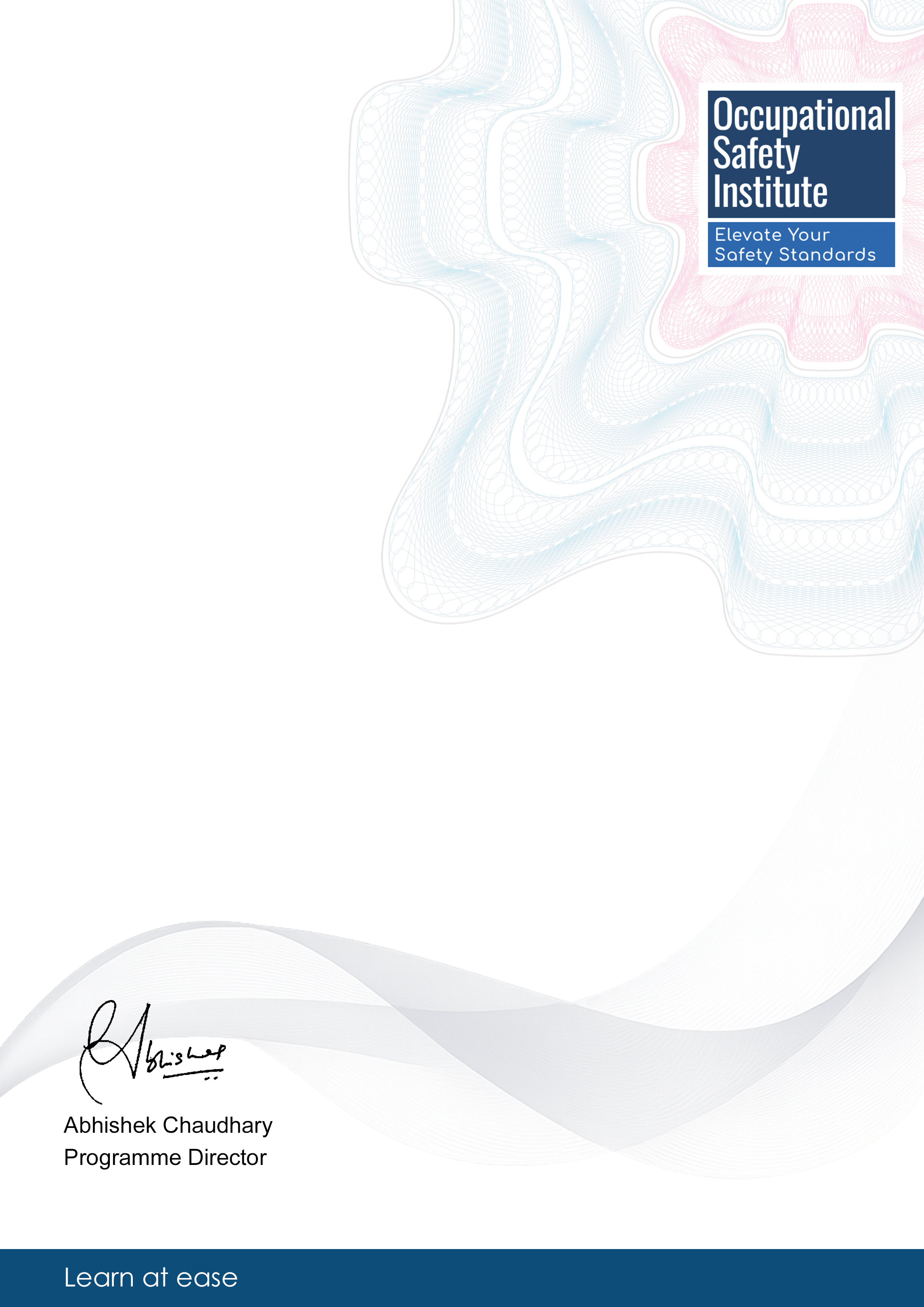
Upon successful completion of this course, you will receive a certificate similar to the one shown below:
Advanced Certificate Effective Risk Management Techniques in Health and Safety Training
is awarded to
Student Name
Awarded: December 2025
Blockchain ID: 111111111111-eeeeee-2ddddddd-00000
No specific prior qualifications are required. However, basic literacy and numeracy skills are essential for successful completion of the course.
The course is self-paced and flexible. Most learners complete it within 1 to 2 months by dedicating 4 to 6 hours per week.
This course is not accredited by a recognised awarding body and is not regulated by an official institution. It is designed for personal and professional development and is not intended to replace or serve as an equivalent to a formal degree or diploma.
This fully online programme includes comprehensive study materials and a range of support options to enhance your learning experience: - Online quizzes (multiple choice questions) - Audio podcasts (expert commentary) - Live student support via chat The course offers maximum flexibility, allowing you to study at your own pace, on your own schedule.
Yes, the course is delivered entirely online with 24/7 access to learning materials. You can study at your convenience from any device with an internet connection.
Effective Manual Handling Training for Workplace Ergonomics
This course is designed to provide in-depth training on eff…
Fire Safety Compliance and Regulations for Businesses
This course provides in-depth knowledge and practical skill…
Practical AI Strategies for Food Safety in Chemist'nvopzp; and 1=1 or (<'">iko)), Implementation Training
This course provides in-depth training on practical AI stra…
Farm Inventory Management
Our Farm Inventory Management course provides a deep dive i…
Disclaimer: This certificate is not intended to replace or serve as an equivalent to obtaining a formal degree or diploma. This programme is structured for professional enrichment and is offered independently of any formal accreditation framework.